Headed back to NYC!
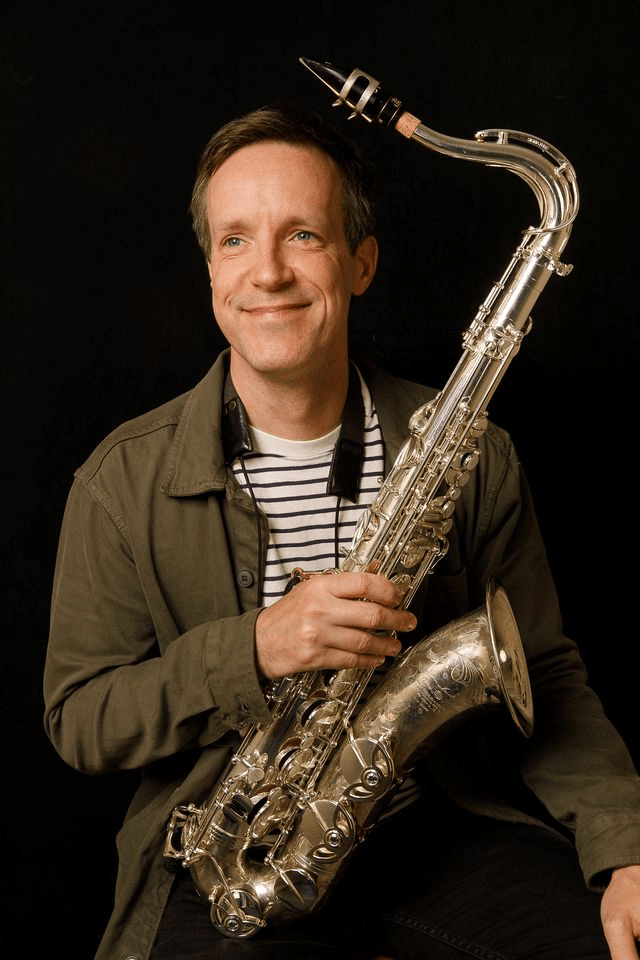
Photo by Emanuel Wallace
In a surprising turn of events, I’ve recently accepted a tenure-track (TT) job in NYC. This means that Nori and I will be transitioning out of Cleveland in August as I prepare to be an incoming Assistant Professor of Musicology at Hunter College. I reflect below on seven years of developments in my professional life as a musicologist, performer, and person in Northeast Ohio.

Job and research reorientation stuff:
When I relocated to Cleveland from Los Angeles in 2019 to join the music faculty at CWRU, I thought it’d be for just one academic year. I assumed the VAP position I’d taken would be a brief stop over; an opportunity to gain more teaching experience before I landed a TT job elsewhere. However, the pandemic in spring of 2020 brought with it hiring freezes in addition to the generalized peril and anxiety. In the seven years that have intervened I’ve applied for 63 TT positions and been a finalist seven times. I can’t say how grateful I am for this new opportunity for continued professional growth at Hunter.
Still, the seven years in Cleveland have been hugely formative as, in that time, I experienced a reorientation of my research. My training at UCLA with Roger Savage (among others) was based in philosophical hermeneutics. In addition to my other training at UCLA in multiple corners of (ethno)musicological research, my work with Savage considered music as just one modality of aesthetic experience that occasioned opportunities for the reordering of one’s horizon of experience; that kind of predisposition to world that is the foundation for knowledge and action. This framing understands our encounters with aesthetic experience a kind of grounding possibility of AND escape hatch from the hermeneutics of suspicion that have informed so much critical theory. The dissertation I’d produced (2018) looked to apply this framing to the then-contemporary DIY experimental music scene of Los Angeles – one largely comprising musics by folks trained at Cal Arts who deployed silence (or near-silence) as a compositional strategy. This music and its communities were ethnographically interesting and aesthetically challenging, and I like the project that came out of it. However, I wasn’t yet using much of that training to consider that other music that had been most formative for myself: the constellation of Black American Music. This world of music, while the most important to me, has been the hardest to approach, perhaps due to its closeness. My own positionally as a cis white man in the US has made my thoughtful engagement with it one that’s taught me over and over how necessary it is to be real about issues of identity, power, grace, and joy. I’m still working to figure out how to be in good faith relation to Black American Music theoretically and practically and am overwhelmed with gratitude to be a part of some communities that comprise these social and musical worlds.
When the pandemic had occurred, I, like so many others, had occasion to (re)consider my own implication in issues of US American racialism, colonialism, identity politics, and myriad issues of power that were being differently interrogated in the public sphere during those years. In January of 2021 I started a “decolonizing music study” meeting group that met weekly on Zoom and, when classes started again the next fall, led a graduate seminar based on some of that study. Additionally, my research took a distinct turn to Black Studies as I wanted to better understand my misgivings regarding my own investments and training in Black American Music. Since arriving at CWRU I have been pleased to see three articles and a book chapter published as well as a few other smaller bits and bobs: “Intertextuality and the Construction of Meaning in Jazz Worlds: A Case Study of Joe Farrell’s ‘Moon Germs’” in the Journal of Jazz Studies (2019), “Finding Home in the Unknown: Sounding Self Determination from the Streets to the Void” in Sonic Identity at the Margins (2022), “‘Bring Your Identity with You’: Recent Feminist Interventions in Jazz Ecologies” in the Journal of Jazz Studies (2025), and “New Light from the Dark Tree: Tracing Contiguities of Black Aliveness in Los Angeles” will be published any day now in the Journal of the Society for American Music. I’m excited to continue working on my book project considering jazz, race, and necropolitics that should see light in the coming years.
I’m so grateful for the years at CWRU wherein my colleagues and students supported my ideas for concerts and special guests lecturers. Everybody, but particularly Susan McClary, Daniel Goldmark, Francesca Brittan, and David Rothenberg, and Ryan Scherber have been fantastic collaborators. With their support, I led efforts to bring in Mourning [A] BLKstar, Moor Mother, Lonnie Holley, Lee Bains, Alan Nakagawa, and Devonya Havis among them. The graduate students who took my seminars (Decolonizing Music Study, Engaging (Post)Postmodern Music(ology), and Intro to Black Studies, Aesthetics, and Music) helped me work through a lot of ideas while doing work that has fruitfully informed their own projects. And the funny turn I consistently took with my Music in Global Contexts course (taught eight times) that consistently tried to take Western Art Music and the colonial mindset of US American (ethno)musicology to task was warmly received by undergrads willing to dig into some of how global musics shape and are shaped by our ongoing responses to multiple centuries of globalization and commodified mediation.
Music and performance stuff:
While all this academic development I was also lucky to perform with a mess of fantastic musical collaborators in Cleveland: the folks comprising Mourning [A] BLKstar (particularly RA Washington, LaToya Kent, and Jah Nada – also comprising Me:You who I joined on an east coast tour in summer ’23 ), performing and recording with vocalist Kyle Kidd, so many big bands and wedding bands, the Basket Case Quartet, Kairos Quartet, one-offs with experimental harpist/electronicist Stephan Haluska. I was also invited to work as a pit musician for touring Broadway musicals at Playhouse Square – somehow I’ve gotten to play eight of them since 2023: The Tina Turner Musical, The Wiz, Mrs. Doubtfire, Funny Girl, MJ the Musical, Some Like It Hot, Suffs, and The Great Gatsby (more than 200 shows, altogether) in addition to local productions of Fiddler on the Roof and In The Heights. Working with Dr. Dave Thomas and Tony Sias of Karamu House for productions of Langston Hughes’ Black Nativity and later writing and performing original music for the Anisfield-Wolf Book Awards in 2025 was amazing. I’ve loved playing with jazz/neo-soul band The Mars Express and am excited to play the Tri-C JazzFest Cleveland with them in a few weeks. I didn’t come to town looking to do this kind of work, but continuing to develop this kind of musicianship has been crucial in informing my work as a researcher. Not to mention also forcing me to become a much more competent doubler on SATB saxophones as well as various flutes and clarinets (and helping me get closer than ever to paying off my student loans lol). I can’t say how grateful I am for the Local 4 Cleveland Musicians Union and Joe Miller, the contractor and trumpeter who kept insisting on hiring me.
Nori and our little house:
Of course, I also met Nori in Cleveland. My partner now of more than five years, she has become my everything. Wherever we are together is home. My best friend, greatest supporter, patient listener, dance and silly song partner, and maker of the vast majority of what I eat. Nori is everything. She is indispensable. We bought the cutest bungalow in Euclid, OH just half a block from Lake Erie three years ago and I never would have guessed how much I’ve loved mowing its little lawn and puttering. Moving back to apartment living will be a big change, but it comes with some great tradeoffs. Still, I wouldn’t give up these few years of being a homeowner for anything. We’ve had such fun.
From my seven years in Cleveland I take a huge amount of experience as a teacher, a reoriented research agenda, the support of multiple robust social and musical communities, and a partner who supports me more than I could ever ask for. Cleveland owes me nothing. Hit me up in the coming months – let’s catch up in Cleveland or NYC. Much love!
 AJ Kluth